
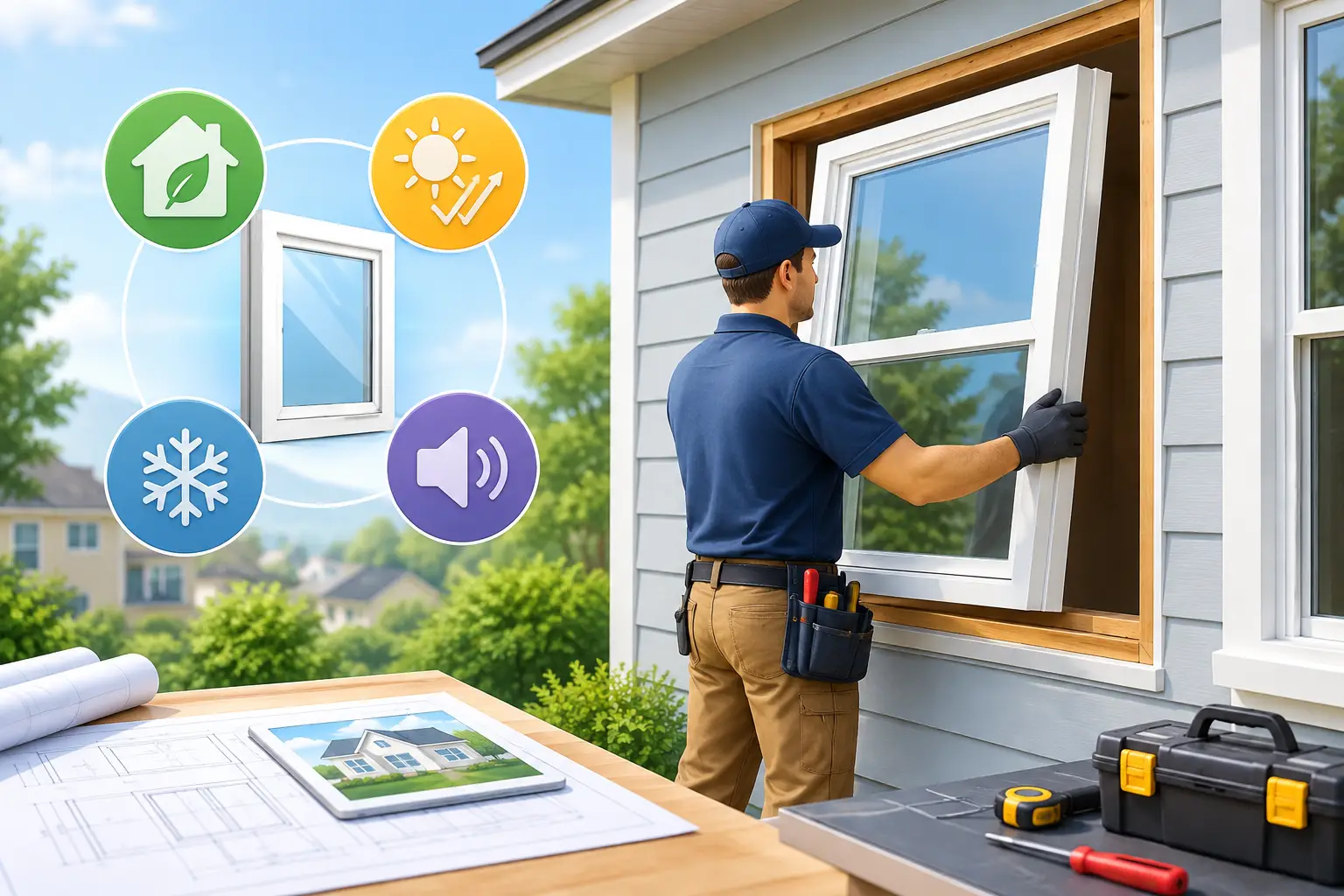
A window can look acceptable from the curb and still be the weakest part of the home’s envelope. Cold glass near a reading chair, traffic noise in a bedroom, drafts around a frame, fading finishes, and rooms that overheat in afternoon sun are all common reasons homeowners begin considering residential window replacement. The right decision is not simply about selecting a new frame color or copying the size of the old opening. It is about matching a precision-engineered window system to the home’s climate, architecture, glass area, and daily use.
For a whole-home renovation, a custom build, or a targeted upgrade, windows deserve the same level of planning as insulation, roofing, and HVAC. They affect the way a home feels every day, while also shaping its exterior character, energy demand, security, and long-term maintenance.
Start Residential Window Replacement With the Real Problem
The most productive window projects begin with diagnosis, not a product catalog. If a room is uncomfortable, the cause may be poor glass performance, an aging weather seal, inadequate frame insulation, incorrect installation, or excessive solar exposure. Replacing a window with a similar basic unit may improve appearance without solving the issue that prompted the investment.
Consider how each elevation of the home performs. South- and west-facing openings often need thoughtful solar control, particularly when the design includes large expanses of glass. Bedrooms facing a busy road may benefit most from acoustic glass construction, well-sealed frames, and professional installation. In colder regions, interior glass temperature and air tightness can have a direct effect on comfort near the window. Coastal or high-moisture locations may place greater value on durable finishes and corrosion-resistant aluminum systems.
A project review should also examine the opening itself. Older homes are rarely uniform. Frames may be out of square, walls may have changed over time, and finished surfaces can conceal conditions that matter during installation. Made-to-measure windows provide the opportunity to address those realities rather than forcing a standard-size product into an imperfect opening.
Performance Comes From the Whole Window System
A high-performance window is not defined by glass alone. Glass, frame, gaskets, hardware, reinforcement, spacers, and installation all work together. A premium glazing package cannot fully compensate for an underperforming frame or poorly sealed perimeter.
European-style uPVC systems are often chosen for their thermal efficiency, low-maintenance finish, and strong insulation values. Multi-chamber frame construction helps reduce heat transfer, while triple gasket seals create consistent compression against air and water infiltration. Systems such as IDEAL 4000, Energy NEO, and IDEAL 7000 can be configured around the performance needs and architectural direction of the project.
Aluminum offers a different set of strengths. It supports slim modern profiles, large panels, durable finishes, and expansive openings that may be difficult to achieve with other materials. Thermally broken aluminum systems, including MB-79N and MB-45 configurations where appropriate, help combine contemporary sightlines with improved thermal performance. Aluminum can be an especially strong choice for large picture windows, premium entrance doors, and broad indoor-outdoor openings.
The best material depends on the window size, design intent, climate, budget, and desired operation. A homeowner seeking maximum insulation for standard punched openings may lean toward uPVC. An architect designing a wall of glass or a dramatic corner opening may prioritize aluminum. Many refined projects use both, placing each material where it performs best.
Choose Glass for Comfort, Not Just a Specification Sheet
Glazing should be selected based on what happens on each side of the window. Low-emissivity coatings can help manage heat transfer. Argon-filled insulated glass units improve thermal performance. Triple glazing can add another layer of insulation and noticeably improve comfort in demanding climates or exposed locations.
However, more glass layers are not automatically the right answer for every opening. Triple glazing adds weight and cost, and its benefit varies by climate, orientation, and system design. For some homes, a well-specified double-pane unit with the right coatings provides excellent value. For others, especially those pursuing superior comfort, quiet, and lower heating and cooling demand, a special triple-glazed configuration is a worthwhile long-term investment.
Sound reduction also requires a specific approach. Noise control is influenced by glass thickness, asymmetric panes, laminated layers, air space, frame construction, and the quality of the perimeter seal. A window that is rated well for thermal performance is not necessarily optimized for traffic, aircraft, or neighborhood noise. If quiet interiors are a priority, that goal should be identified before the system is quoted.
Operation Changes How You Live With the Window
Window operation is a design decision as much as a ventilation decision. Fixed windows maximize glass area and can provide excellent air tightness, but they do not open. Casement styles offer wide ventilation and a strong compression seal. Tilt and turn windows are a practical European solution for modern homes: tilt the sash inward from the top for controlled everyday airflow, or turn it inward for full ventilation, cleaning, and emergency egress when properly sized and located.
This flexibility is particularly valuable in bedrooms, upper levels, and homes where exterior access for cleaning is limited. Quality hardware and multi-point locking also support security by locking the sash at multiple locations around the frame rather than relying on a single latch point.
For larger openings, the choice may extend beyond windows. Lift-and-slide doors, standard sliding systems, and bi-fold glass doors can create a more direct connection between interior living spaces and patios, gardens, or views. These systems require careful structural planning, threshold detailing, drainage considerations, and exact measurements. Large glass is visually powerful, but it must be engineered for its scale.
Installation Is Where the Investment Is Protected
Even the most advanced window system can disappoint if installation is treated as an afterthought. The frame must be positioned correctly, anchored appropriately, insulated around the rough opening, flashed for water management, and sealed in a way that accounts for the building’s materials and local exposure conditions.
Replacement work adds another layer of judgment. A full-frame replacement can allow for inspection of the opening, upgraded flashing, and a new insulated perimeter. An insert-style approach may preserve more existing trim and reduce disruption, but it can reduce visible glass area and may not address concealed damage or poor original details. Neither approach is automatically better. The right method depends on the condition of the existing frame, exterior cladding, interior finishes, and project goals.
Professional installation also protects appearance. Consistent reveals, properly operating sashes, clean trim transitions, and carefully finished sealant lines make a visible difference in a design-forward home. More importantly, they help preserve the window’s intended air, water, and thermal performance.
Plan the Project Before Manufacturing Begins
Custom windows reward early decisions. Before manufacturing, the project team should confirm measurements, handing, operation, glazing, frame color, divided-light patterns, hardware finishes, screens, safety requirements, and performance priorities. Small uncertainties become expensive once products are in production or the opening has been prepared.
For projects using European-manufactured systems, logistics deserve the same attention as product selection. Manufacturing schedules, international transport, customs clearance, delivery timing, and installation sequencing need coordination with the broader construction schedule. Gold Crown Europe Windows manages this process from engineering review and itemized quoting through delivery and professional installation, helping customers avoid the burden of sourcing overseas components independently.
A detailed quote should make the scope clear. It should identify the system, glazing, dimensions, operation, colors, hardware, installation approach, and any special site conditions. The lowest initial price is rarely the most useful comparison if one proposal omits essential installation details, better glazing, or the exact custom features another includes.
When Replacement Is Worth Doing Now
Visible failure is not the only reason to replace windows. Fogging between panes, water intrusion, cracked frames, difficult operation, and rotting wood demand attention. Yet many replacements are planned before severe failure because the homeowner is renovating, improving energy performance, reducing noise, changing the facade, or preparing a property for long-term ownership.
The strongest return is often felt in daily comfort rather than one headline number. A quieter bedroom, a living room that stays more even in temperature, easier cleaning, stronger locks, and frames that require less maintenance can change how a home functions for years. Energy savings matter, but they should be evaluated alongside durability, architectural fit, installation quality, and the value of a more comfortable home.
The most useful next step is to walk through the house at different times of day and identify what each opening needs to do better. Bring those observations to the planning process. Exact measurements and the right system can turn window replacement from a recurring maintenance concern into a lasting part of the home’s performance and design.