
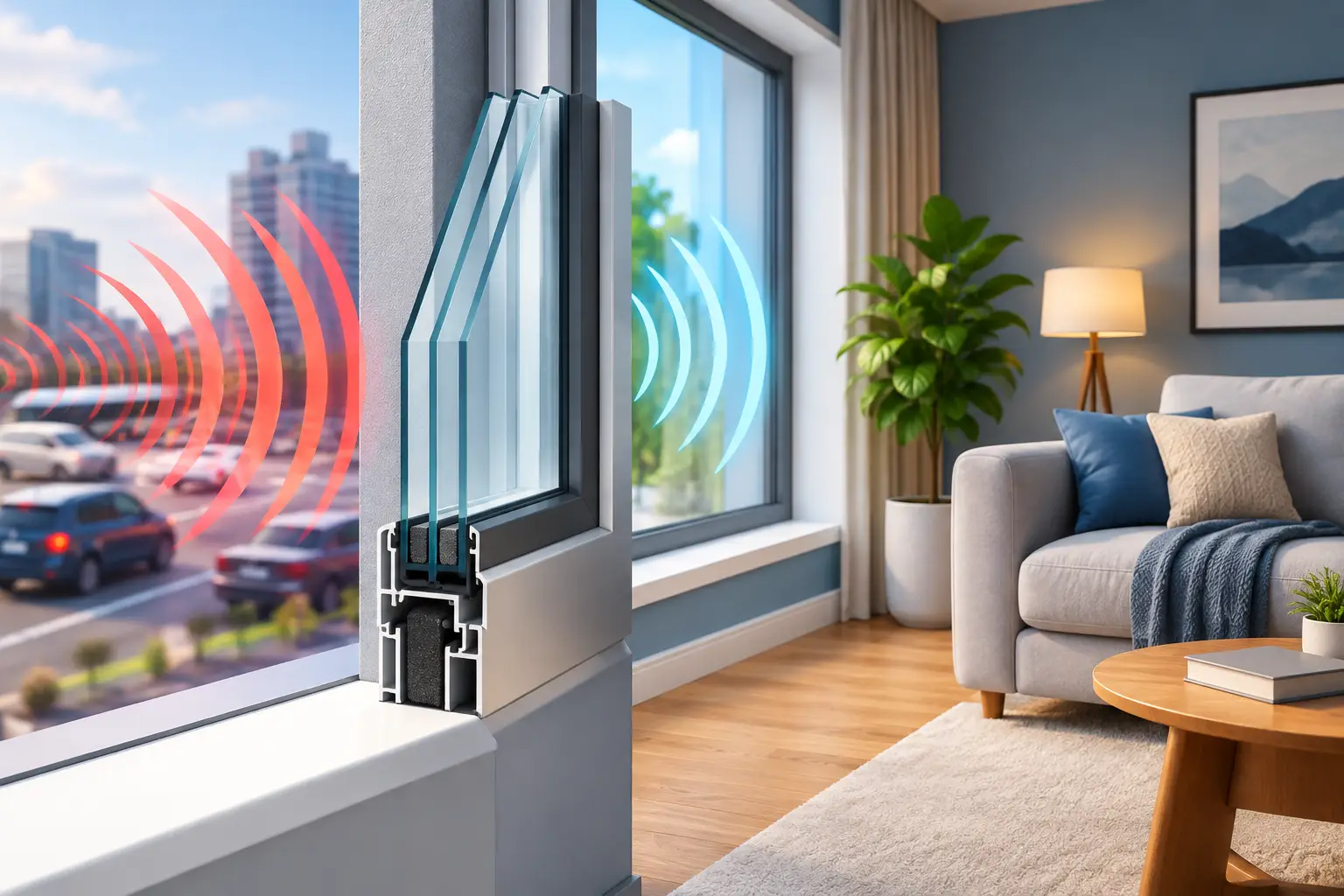
A bedroom facing a busy street can be beautifully designed and still feel unfinished if truck traffic, barking dogs, or early-morning construction comes through the glass. The best windows for soundproofing homes are not simply the thickest units available. They are precision-engineered systems that combine the right glazing, frame, seals, opening style, and professional installation for the specific noise outside your home.
For a new build, whole-home replacement, or high-end remodel, sound control should be considered at the same stage as energy performance, security, and architecture. A window is an opening in the building envelope. If its components do not work together, even premium glass can leave a room louder than expected.
What makes a window effective at blocking sound?
Sound travels through air and through vibration. A window reduces noise when it adds mass, creates separation between panes, limits vibration, and closes tightly against air gaps. This is why the glass package matters, but it is never the entire answer.
Performance is often described with two ratings. Sound Transmission Class, or STC, measures how well an assembly reduces common indoor and outdoor noises such as conversation, television, and many traffic sounds. Outdoor-Indoor Transmission Class, or OITC, is particularly useful for exterior noise because it places more emphasis on lower-frequency sounds, including trucks, aircraft, and roadway rumble.
Higher ratings generally indicate stronger sound reduction, but ratings should be read in context. A window tested in a laboratory is not the same as a completed opening in a home with adjacent wall penetrations, a poorly sealed frame, or a hollow-core exterior door nearby. For homes near highways, rail lines, airports, schools, or active downtown areas, a project review should look beyond a single number.
Best windows for soundproofing homes: the essential features
Laminated glass for difficult exterior noise
Laminated glass is one of the most effective upgrades for residential sound control. It consists of two pieces of glass bonded with an acoustic interlayer. That interlayer helps dampen vibration as sound energy moves through the glass, which can make a meaningful difference against traffic and other persistent exterior noise.
It also adds a practical security benefit. When broken, laminated glass tends to remain held together by the interlayer rather than falling away in sharp pieces. For street-level rooms, children’s bedrooms, urban residences, and homes where quiet and security are both priorities, this combination is especially compelling.
The best result is often an insulated glass unit that includes laminated glass on one pane, rather than treating laminated glass as a stand-alone solution. The exact build-up should be selected for the noise source and window size. A wide picture window facing a road may need a different configuration than smaller casement windows in a quieter side elevation.
Asymmetrical double glazing
Two panes with the same glass thickness can perform well thermally, but they are not always the strongest choice acoustically. When panes have different thicknesses, they resist sound frequencies differently. This asymmetrical construction helps prevent both panes from responding in the same way to incoming noise.
For example, a glass package may pair a thicker outer lite with a thinner inner lite, sometimes combined with a laminated pane. The goal is not to specify the heaviest possible unit without thought. It is to create a balanced assembly that targets the noise affecting the room while remaining suitable for the window system, operability, and design.
Triple glazing with the right acoustic specification
Triple glazing brings clear advantages in thermal insulation and interior comfort. Its additional pane and air spaces can also support better sound performance, especially when it is built with unequal glass thicknesses and an acoustic laminated lite.
Still, triple glazing is not automatically quieter than a well-designed double-glazed acoustic unit. Three equal panes can be excellent for energy efficiency yet offer less acoustic improvement than expected for certain frequencies. Triple glass is also heavier, which affects sash sizing, hardware selection, and the type of opening system required. A properly engineered European uPVC or aluminum system is designed to manage that weight while maintaining dependable operation and compression at the seals.
Deep, insulated frames and continuous gaskets
Glass receives most of the attention, but the frame has a major role in real-world sound control. Multi-chamber uPVC profiles and thermally broken aluminum frames provide a stable, insulated perimeter around the glazing. More importantly, they support precise gasket placement and sash alignment.
A triple gasket seal creates multiple lines of defense against air, water, and sound infiltration. Air leaks are sound leaks. A small gap around a sash or a poorly adjusted lock point can undermine the benefit of an advanced glass package. European tilt-and-turn windows are particularly effective because their multi-point locking hardware pulls the sash evenly into the frame, producing consistent compression around the full perimeter.
Fixed windows can offer excellent acoustic performance because they have no operable sash joint. However, most homes need ventilation and egress in key locations. Casement and tilt-and-turn windows are often better choices than basic sliding windows where sound control is a priority, since their closing action can create a tighter seal. The right option depends on room use, code requirements, access, and the architectural intent.
Installation is part of the soundproofing system
A precision-built window cannot compensate for an imprecise opening. Proper installation begins with exact measurement, plumb and square preparation, appropriate shimming, and compatible perimeter sealing. The gap between the frame and rough opening must be insulated and sealed without distorting the frame or preventing drainage where required.
This is also why replacement projects need an honest assessment of the existing wall condition. If exterior cladding, flashing, interior trim, or the opening itself has deteriorated, a simple insert replacement may not deliver the desired result. In some cases, a full-frame installation is the better long-term decision because it allows the entire opening to be corrected and sealed.
Sound can also bypass the window through nearby weak points. Check exterior doors, attic vents, wall penetrations, recessed shades, and the connection between the window and surrounding construction. A room with one high-performance window and an unsealed wall vent will still admit noise.
Choosing the right system for your home
Start with the source of the noise. Highway and aircraft noise tend to include low frequencies, so OITC and laminated, asymmetrical glass deserve close attention. Nearby voices, neighborhood activity, and intermittent city noise may respond well to a different balance of glazing and sealing. A home office may require a quieter result than a kitchen, while a master suite may justify more substantial acoustic upgrades than a secondary guest room.
Next, consider the opening style and sightlines. uPVC systems offer excellent insulation, low maintenance, and strong acoustic potential through multi-chamber profiles and compression seals. Aluminum systems are ideal when the design calls for slim modern profiles, large glass areas, or expansive openings. Thermally broken aluminum can combine contemporary architecture with dependable weather resistance and refined performance.
For large doors, the same principles apply, but the engineering is more demanding. Lift-and-slide doors, for example, must balance broad glass panels and easy operation with reliable perimeter sealing. They can be specified for impressive comfort, but their acoustic outcome should be evaluated as part of the complete wall rather than assumed from glass thickness alone.
At Gold Crown Europe Windows, custom sizing and engineering review help align the system with the opening, glass package, architecture, and performance goals before manufacturing begins. That project-based approach matters when a window must do more than fill a rough opening – it must contribute to a quieter, more comfortable home for years to come.
Avoid these common soundproofing mistakes
Do not choose windows solely by pane count. Double or triple glazing without acoustic planning may improve comfort but miss the sound frequencies that bother you most. Likewise, do not assume that a thicker single pane is always the best answer. Laminated glass, unequal pane thickness, airspace, seals, and frame design work as a system.
Avoid treating acoustic upgrades as an afterthought once windows are already ordered. Glass specifications, sash dimensions, hardware capacity, and installation details should be resolved early, particularly in custom homes and major renovations. Finally, be cautious of products marketed as “soundproof.” No operable residential window makes a home completely silent. The realistic objective is substantial reduction, better sleep, clearer conversations, and rooms that feel protected from the activity outside.
Quiet is not a decorative upgrade. It changes how a home feels at 6 a.m., during a work call, and at the end of a long day. When you plan the glazing and installation with the same care as the architecture, your windows can provide a calmer interior without asking you to compromise on light, views, or design.