
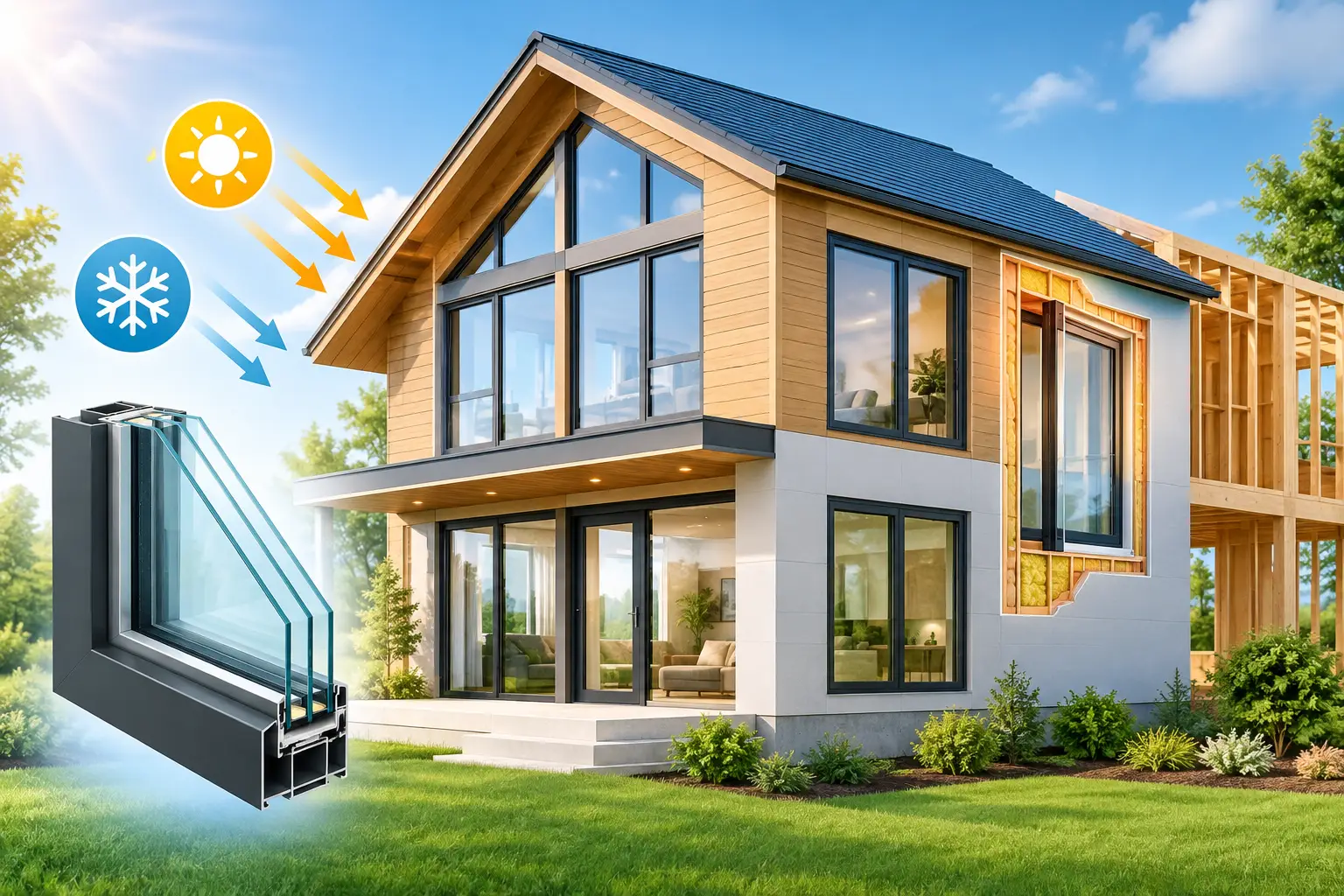
A new home can have a high-efficiency HVAC system and excellent insulation, yet still feel cold near the glass, overly warm in sunny rooms, or loud along a busy street. Energy efficient windows for new construction address those comfort gaps before drywall, trim, and exterior finishes make corrections expensive. They are not simply a finishing selection. They are part of the building envelope, influencing how the home performs every day.
For homeowners, builders, and architects, the right window package balances thermal performance with the architecture of the project. Glass area, orientation, local climate, frame material, opening style, and installation details all matter. The best choice is rarely the same for every elevation or every project.
Why Energy Efficient Windows Matter in New Construction
New construction is the ideal time to specify high-performance windows because the window opening, wall assembly, and exterior design can be coordinated as one system. A made-to-measure unit can be engineered around exact rough openings, wall thickness, sill conditions, and desired sightlines. That creates a better foundation for air, water, and thermal control than trying to adapt a stock-size product later.
Windows are naturally less insulating than an insulated wall, so their performance has an outsized effect on comfort. In winter, poorly insulated glass and frames can create cold interior surfaces and uncomfortable downdrafts. In summer, unplanned solar gain can overload rooms with west- or south-facing glass. High-performance window systems help moderate these conditions, reducing the demand placed on heating and cooling equipment.
Energy savings matter, but daily comfort is often the benefit people recognize first. A well-specified European-style window can make a bedroom quieter, a living room more evenly conditioned, and a large glass opening more enjoyable throughout the year. The result is architecture that looks open and modern without asking occupants to accept drafts, condensation, or excessive heat gain as the cost of more glass.
Start With the Ratings That Affect Real Performance
A window label can contain several numbers, but they should be read in relation to the project rather than treated as a simple scorecard. Lower numbers are not always better if they reduce useful daylight or conflict with the solar strategy for the home.
U-factor and insulation
U-factor measures how readily heat moves through the complete window assembly. A lower U-factor means better insulating performance. In colder climates, a low U-factor is particularly valuable because it helps keep interior glass surfaces warmer and reduces heat loss during the heating season.
Frame construction matters as much as the glass package. Multi-chamber uPVC profiles and thermally broken aluminum systems are designed to limit thermal transfer through the frame. When paired with insulated glazing, warm-edge spacers, and precision gaskets, they provide a more consistent barrier around the entire opening.
Solar heat gain and orientation
Solar Heat Gain Coefficient, commonly called SHGC, indicates how much solar heat passes through a window. Lower SHGC can help control summer heat gain, especially on west-facing elevations that receive intense afternoon sun. In colder regions, a carefully selected higher SHGC may be useful on a south-facing elevation where winter sun can contribute to passive warmth.
This is why one glazing specification does not automatically belong on every side of a home. An architect may use different glass coatings for a shaded north elevation, a glass-heavy west wall, and a south-facing great room. Exterior overhangs, interior shading, landscaping, and room use should be part of that discussion.
Air infiltration and condensation resistance
Air leakage is one of the most common reasons a home feels uncomfortable around windows. Precision-engineered tilt-and-turn windows use compression seals that engage around the sash perimeter when closed. Triple gasket seal designs can improve resistance to air and water infiltration while also contributing to sound control.
Condensation resistance also depends on indoor humidity, exterior temperatures, glass performance, and ventilation. Higher-performing frames and glazing improve the interior surface temperature, but they do not eliminate the need to manage humidity in a tightly built home. Good window selection and a well-designed mechanical ventilation strategy work together.
Choose the Frame System for the Building, Not Just the Look
uPVC and aluminum both offer strong advantages, but they serve different priorities. The correct choice depends on opening size, structural requirements, exposure, architectural style, and performance goals.
uPVC systems are a strong fit for many residential new builds because they offer excellent thermal insulation, durable low-maintenance finishes, and substantial design flexibility. Systems such as IDEAL 4000, Energy NEO, and IDEAL 7000 use multi-chamber profile construction to support energy efficiency without requiring bulky-looking frames. They work especially well for tilt-and-turn windows, fixed units, and custom combinations that bring in daylight while maintaining a refined, modern profile.
Thermally broken aluminum is often selected where larger spans, slim sightlines, or expansive glass are central to the design. Aluminum systems such as MB-79N can support contemporary window walls, oversized fixed panels, and demanding commercial or residential applications. Aluminum is inherently strong and corrosion resistant, but not all aluminum windows perform alike. A true thermal break is essential when energy performance is part of the specification.
For large openings, the operating system deserves equal attention. Lift-and-slide doors can carry substantial glass panels while providing smooth operation and strong compression when closed. Bi-folding systems create a wider opening to patios and outdoor living areas, though their performance and threshold requirements should be reviewed carefully for the climate and exposure. Bigger openings create more design freedom, but they also require exact engineering and installation planning.
Specify the Glass Package Early
The insulating glass unit does much of the visible work, but it has to be matched to the frame and the climate. Double glazing may be appropriate for many regions and project budgets. Triple glazing can provide a lower U-factor, warmer interior glass temperatures, and better sound reduction, particularly in cold climates or homes near airports, traffic corridors, and active neighborhoods.
Low-emissivity coatings help manage radiant heat transfer, while inert-gas fills between panes improve insulation. Laminated glass can add security and help reduce certain outside noise frequencies. These choices should not be made from a single generic specification. A quiet home near a highway may benefit from a different glass build-up than a mountain home focused on winter performance or a coastal home designed for high sun exposure.
Sightlines are another consideration. More layers of glass and larger framing sections can affect the visual light transmission and appearance of a window. European systems are valued because they can combine sophisticated performance with clean, slim modern profiles, but every system has practical limits. Reviewing elevations and sample sections early prevents surprises once the project reaches fabrication.
Installation Determines Whether the Window Performs as Designed
A premium window cannot compensate for an unprepared opening. New construction installation should begin with exact measurements and a review of the wall assembly, including weather-resistive barriers, flashing approach, drainage plane, exterior cladding, insulation, and interior air sealing.
The goal is not to trap water behind trim or rely on foam as the only air-control strategy. The window needs a properly prepared sill, compatible flashing, secure anchoring, and a continuous connection to the surrounding weather barrier. The installation also needs to account for expansion and contraction, especially with large aluminum assemblies and dark exterior finishes exposed to direct sun.
Professionally installed systems should be checked for plumb, level, square, smooth operation, lock engagement, and even gasket compression. On tilt-and-turn units, small adjustments can affect how the sash seals and operates. This is detail work, but it is exactly where long-term performance is protected.
Plan the Window Package Before Finalizing the Budget
The least expensive window quote can become costly if it omits needed glazing, custom sizes, structural details, screens, hardware, installation coordination, or freight planning. For new construction, an itemized quote should make the scope clear so the builder and owner can compare complete systems rather than comparing a base product against a finished solution.
Custom European windows also require realistic scheduling. Manufacturing, international logistics, customs clearance, site readiness, and installation sequencing should be coordinated before the building reaches the window stage. Gold Crown Europe Windows helps manage this process from plan review and custom manufacturing through delivery and professional installation, reducing the number of handoffs a project team must manage.
The most effective time to make performance decisions is before the openings are framed and the exterior design is locked. Bring window elevations, rough opening dimensions, climate location, exterior finish selections, and desired operation types into the early conversation. That preparation allows the window system to support the architecture instead of becoming a late-stage compromise.
A new construction window package should make the house feel as carefully built as it looks. When frames, glazing, hardware, and installation are specified with the same precision as the rest of the envelope, the payoff is felt in quieter rooms, steadier temperatures, lower energy demand, and a home that remains comfortable long after move-in day.