
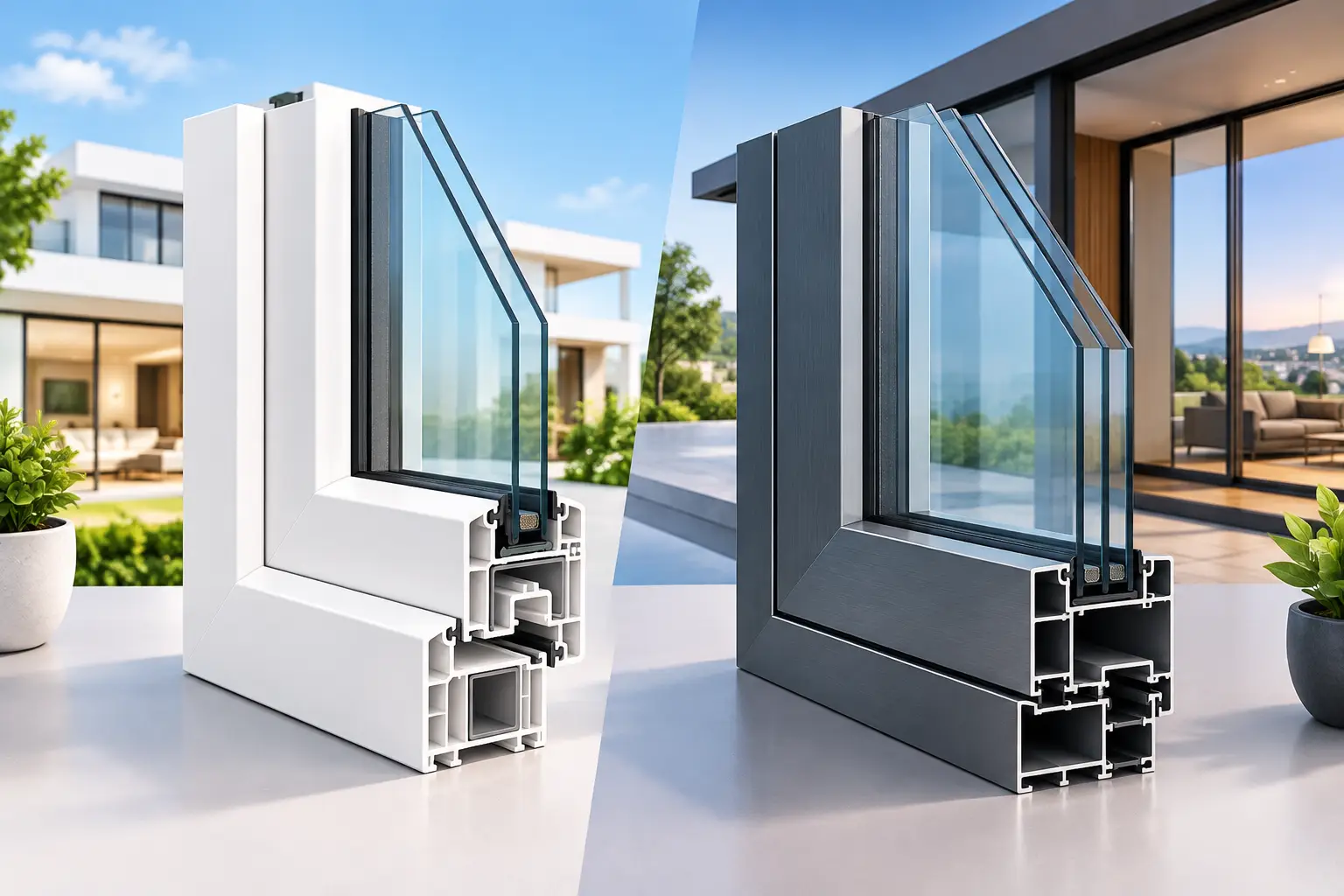
A window decision can shape how a building feels for decades. In the comparison of uPVC vs aluminum windows, the better choice is not simply about appearance or initial price. It depends on the opening size, climate, glass specification, architectural style, performance target, and how the system will be professionally installed.
For a custom home, renovation, multifamily project, or commercial façade, both materials can deliver exceptional results when they are correctly engineered. The key is selecting a precision-built system that supports the way the building will be used – from quiet bedrooms and energy-efficient living spaces to expansive glass walls and high-traffic entries.
uPVC vs Aluminum Windows: The Core Difference
uPVC and aluminum are fundamentally different framing materials. uPVC is a high-performance, unplasticized vinyl material formed into multi-chamber profiles. Aluminum is a lightweight metal with exceptional structural strength, typically specified with a thermal break to improve insulation.
That difference affects what each system does best. uPVC frames are often selected for strong thermal performance, sound reduction, and low-maintenance residential applications. Aluminum frames are valued for narrow sightlines, rigidity, large-panel capability, and contemporary architectural freedom.
Neither material is automatically the right answer for every opening. A well-designed home may use uPVC tilt-and-turn windows throughout private living areas and aluminum lift-and-slide or bi-folding systems where large glass spans are essential. The most successful projects match each system to the demands of the location.
Thermal Performance and Everyday Comfort
Thermal performance is one of the first reasons homeowners compare these materials. uPVC is naturally non-conductive, meaning it does not transfer heat and cold as readily as metal. Its multi-chamber profile design can create an effective insulating barrier around the glass unit. Combined with triple glazing and a triple-gasket seal, a quality uPVC system can help reduce drafts, exterior noise, and unwanted heat transfer.
For homes in cold winters, hot summers, or regions with significant temperature swings, that insulation can make rooms feel more consistent from one wall to another. It can also reduce the energy required to heat and cool the home.
Aluminum conducts heat more readily, but modern European aluminum systems address this with engineered thermal breaks. A thermal break separates the interior and exterior aluminum sections using an insulating material, helping limit heat flow through the frame. High-quality thermally broken aluminum windows can provide strong energy performance, especially when paired with the right glazing, spacers, coatings, and installation details.
The practical distinction is this: uPVC often provides an advantage when maximum insulation is the priority for standard-sized residential openings. Thermally broken aluminum remains a high-performance choice when a project needs larger dimensions, slimmer frames, or a more architectural glass-forward appearance.
Glass and installation matter as much as the frame
A frame material alone does not determine the final performance of a window. Glass selection, airtight seals, drainage design, hardware adjustment, wall integration, and professional installation all matter. Even a premium system can underperform if the rough opening is not prepared correctly or the unit is not installed square, level, and sealed to the building envelope.
For that reason, project planning should begin with the whole assembly. The goal is not just to purchase windows. It is to create a finished opening that controls air, water, sound, and heat reliably.
Design Freedom, Sightlines, and Opening Size
Aluminum is the natural choice when the design calls for large panes of glass and slim visible framing. Its strength allows it to support wider and taller panels with relatively narrow profiles. This makes it especially well suited for contemporary residences, commercial storefronts, multifamily properties, corner windows, curtain-wall style compositions, and expansive patio openings.
Large lift-and-slide doors are a clear example. Aluminum can carry substantial glass weights while maintaining smooth operation and refined sightlines. For a home designed around views, a covered terrace, or a strong indoor-outdoor connection, aluminum provides design flexibility that is difficult to duplicate with bulkier frame materials.
uPVC has its own visual strengths. European uPVC profiles offer clean lines, modern finishes, and practical tilt-and-turn operation that works especially well in bedrooms, kitchens, living spaces, and whole-home replacement projects. They can be custom manufactured for exact openings rather than forcing a renovation into standard stock sizes.
However, uPVC frames generally need more profile depth than aluminum as openings become larger. That does not make them less refined. It simply means aluminum may be the better structural choice where the architectural concept depends on very large panels and minimal frame visibility.
Durability, Maintenance, and Climate Exposure
Both uPVC and aluminum are low-maintenance materials compared with traditional wood windows. Neither requires routine painting, and both can be specified in finishes that support a modern, long-lasting appearance.
uPVC does not rot, swell, or corrode. It is a practical solution for homeowners who want durable frames with minimal upkeep. Quality systems use reinforced profile design, durable gaskets, and reliable hardware to support years of everyday use. For many residential applications, occasional cleaning and basic hardware care are all that is needed.
Aluminum is highly durable and dimensionally stable. It performs particularly well in applications that receive frequent use, such as commercial doors, sliding systems, and large operable panels. Powder-coated aluminum finishes offer strong resistance to weathering and can be specified in a wide range of colors.
In coastal or highly exposed environments, the finish specification and system details deserve close attention. Aluminum can be an excellent solution, but it should be selected with appropriate corrosion-resistant coatings and hardware for the local conditions. A project team should also consider wind exposure, water management, and the building’s structural requirements rather than choosing solely by material category.
Sound Reduction and Security
Quiet interiors are often one of the most appreciated benefits of European-style window systems. Both uPVC and aluminum can support excellent sound control when combined with insulated glass, laminated glass where appropriate, compression seals, and precise installation.
uPVC’s multi-chamber construction and compression gasket systems can contribute to a comfortable, quiet interior environment. This is valuable for homes near traffic, airports, active neighborhoods, or commercial corridors.
Aluminum systems can also achieve strong acoustic results, particularly with deeper profile configurations and high-performance glazing. For either material, glass composition usually has a major influence on sound reduction. A window facing a busy street may need a different glass build-up than one facing a quiet backyard.
Security should be evaluated at the system level as well. European windows and doors commonly use multi-point locking, which secures the sash at several locations rather than relying on a single latch point. Combined with reinforced frames, quality hardware, and suitable glazing, this provides a more secure and confident daily experience.
Cost: Look Beyond the Initial Quote
Initial cost varies by system size, glazing, finish, hardware, performance requirements, and installation complexity. In many standard residential configurations, uPVC can offer a more cost-efficient path to excellent insulation and modern functionality. It is often a compelling option for whole-house window replacement or new construction where energy performance is a leading priority.
Aluminum may carry a higher investment, particularly for thermally broken profiles, oversized glass, custom colors, and advanced sliding or folding systems. That investment can be justified when the design requires larger openings, slimmer frames, high-use durability, or a premium architectural appearance.
The more useful question is not which frame is cheapest. It is which system will meet the project’s performance and design requirements without compromise. Replacing an undersized or poorly specified window later is far more disruptive than making the correct selection during design and construction.
How to Choose the Right System for Your Project
Choose uPVC when your priority is high thermal efficiency, strong sound insulation, low maintenance, and excellent performance across typical residential opening sizes. It is particularly effective for custom homes, renovations, and replacements that benefit from tilt-and-turn operation, triple glazing, and tight compression seals.
Choose aluminum when your design depends on expansive glass, narrow profile lines, large doors, commercial durability, or a contemporary façade with maximum visual openness. Thermally broken aluminum systems are especially valuable where architectural scale and energy performance need to work together.
For many projects, the right answer is a purposeful combination. uPVC can serve private, comfort-focused rooms, while aluminum frames the major view, patio, entry, or commercial opening. Gold Crown Europe Windows helps project teams review plans, measurements, system options, manufacturing requirements, logistics, and installation so the finished result is exact from custom design to final operation.
A window should do more than fill an opening. Specify the material and system that supports the way the building needs to perform, then give it the precise sizing, glass package, and installation it deserves.