
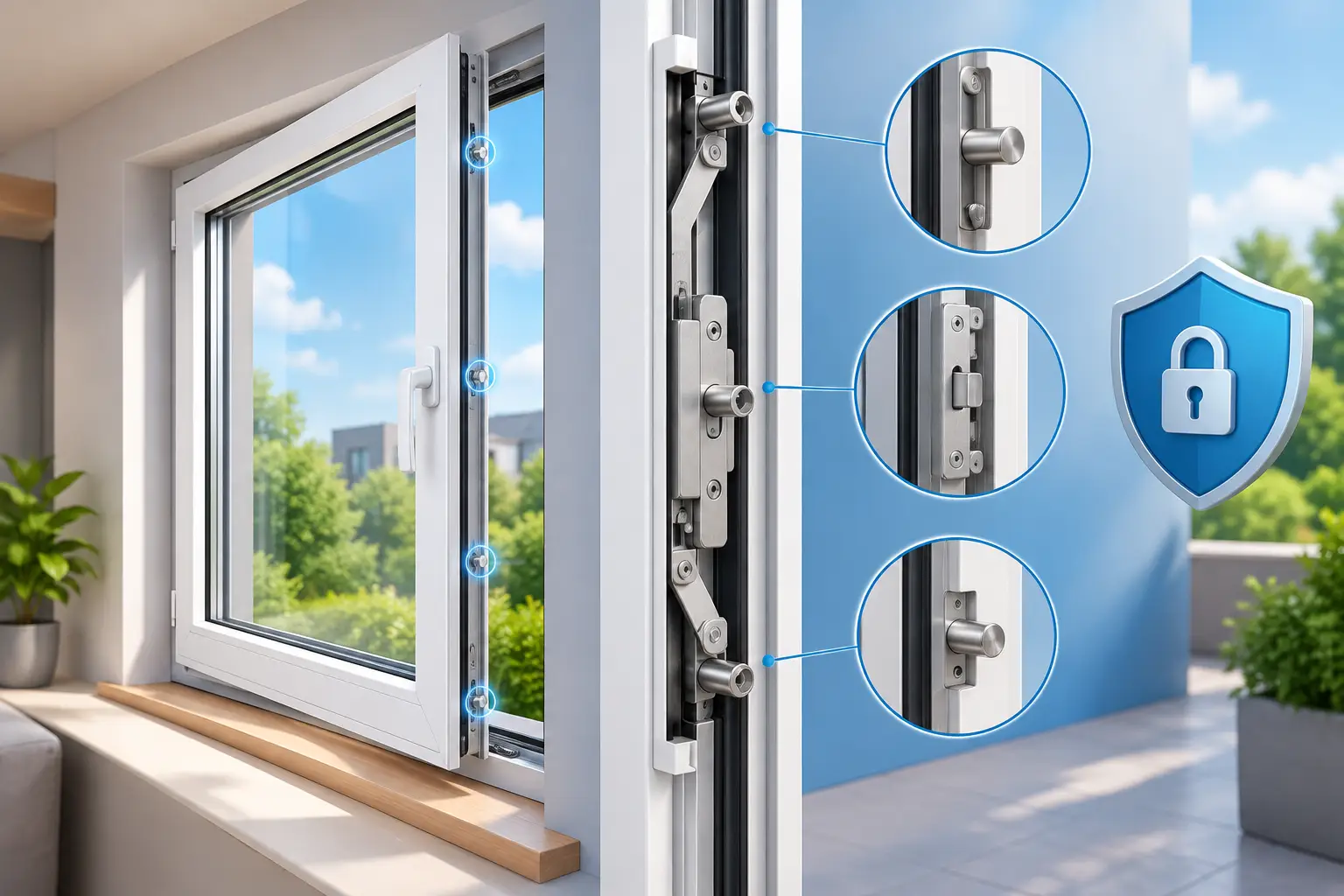
A window can look closed while leaving its frame vulnerable at the corners, along the sash, or where pressure changes across a large opening. Windows with multipoint locking system hardware solve that problem by securing the sash at several locations with one handle operation. For homeowners and project teams investing in custom European-style windows, that difference affects more than security. It also supports a tighter seal, quieter rooms, and consistent long-term performance.
A multipoint locking system is not a decorative upgrade. It is part of the engineering that helps a precision-built window perform as one complete assembly: glass, frame, gaskets, hinges, hardware, and installation working together.
How Multipoint Locking Systems Work
A traditional single-point lock typically secures the sash near the handle. A multipoint system uses a central locking mechanism connected to locking points around the sash perimeter. When the handle is turned, rollers, mushroom cams, bolts, or hooks engage with matching keepers in the frame.
On a European tilt-and-turn window, the same handle can control multiple functions. One position locks the window, another allows the sash to tilt inward for controlled ventilation, and a third opens it inward like a casement window. The locking hardware coordinates those functions while pulling the sash evenly into the frame.
The exact number and type of locking points depend on the window size, opening style, hardware configuration, and project requirements. A larger operable sash may require more locking points than a compact bathroom window. What matters is not simply claiming a high point count. The hardware must be correctly sized, positioned, and adjusted for the frame, glass weight, and intended use.
Why Windows With Multipoint Locking Systems Perform Better
The most obvious benefit is security. When a sash is held in place at multiple locations, it is more difficult to pry open than a window secured only at one central latch. Mushroom-style locking cams, often used in European hardware systems, are designed to engage securely with the frame keepers and resist forced movement.
That added security is especially valuable on first-floor bedrooms, accessible side elevations, patios, and urban properties where windows may be close to walkways or neighboring structures. It also brings reassurance to homeowners without changing the clean, slim appearance of the window.
Security is only part of the story. Multiple locking points apply more even compression to the weatherstripping around the sash. When paired with high-quality gaskets and a properly engineered frame, this compression helps limit air movement and water infiltration. In practical terms, fewer drafts can mean more stable room temperatures and less strain on heating and cooling equipment.
This is one reason European window systems are often specified for high-performance homes. Triple glazing, multi-chamber uPVC profiles or thermally broken aluminum, and perimeter locking are not isolated features. Together, they support thermal efficiency and interior comfort.
A Tighter Seal Helps Control Noise
Sound finds weak points. A poorly sealed operable window can allow traffic, aircraft, neighborhood activity, and wind noise to enter even when the glass package itself is substantial. A multipoint system helps maintain even sash-to-frame contact around the perimeter, which supports the work of acoustic glass and compression gaskets.
It will not make every home silent. Noise reduction depends on the glass thickness, laminated layers, air gaps, wall construction, installation quality, and the frequency of the sound outside. Still, for projects near busy streets or active commercial areas, secure perimeter compression is an essential part of a quieter window specification.
Better Performance Requires Proper Adjustment
Multipoint hardware is precision equipment, not a set-it-and-forget-it accessory. During professional installation, the sash must be aligned so each locking point engages correctly and the pressure against the gaskets remains balanced. If the sash is out of square, a handle may feel stiff, the lock may not engage smoothly, or one area of the seal may compress more than another.
This is why exact measurements, compatible hardware, and experienced installation matter. An excellent window can underperform if the opening is improperly prepared or if the frame is not installed level, plumb, and square.
Choosing the Right System for Your Project
The appropriate locking configuration starts with how the window will be used. A fixed picture window does not need operating hardware, while a tilt-and-turn window requires a coordinated system that supports ventilation, inward opening, and perimeter locking. For a contemporary home with large openings, the weight of triple-pane glass and the dimensions of each sash become central engineering considerations.
uPVC and aluminum can both support high-performance multipoint locking systems, but they serve different architectural needs. uPVC frames are valued for thermal performance, low maintenance, and strong everyday comfort. Aluminum offers durability, narrow sightlines, and design flexibility for larger glazed areas and contemporary commercial applications. The right choice depends on the elevation, desired profile, glazing, exposure, and budget.
For coastal, high-wind, or weather-exposed locations, it is also wise to evaluate the full tested window assembly. Locking hardware contributes to performance, but it does not replace appropriate glass, drainage design, reinforcement, structural anchoring, or local code requirements. A well-designed system considers all of these elements together.
Do More Locking Points Always Mean More Security?
Not necessarily. More locking points can be appropriate for a taller or wider sash, but quality and compatibility matter more than a marketing number. The hardware should be engineered for the sash dimensions and weight, with durable keepers, reliable internal gearing, and correct adjustment.
Forcing a heavy sash into a system that was not designed for it can create long-term wear. Conversely, specifying a system built for the actual opening size delivers smoother operation and a more reliable seal. This is where a project-specific review is more valuable than choosing a window from a one-size-fits-all shelf.
What to Ask Before You Specify
When reviewing custom windows, ask how the sash locks into the frame and whether the system uses true perimeter locking. Confirm the opening operation, the hardware finish, and whether the specified glass package affects sash weight or operating limits.
Ask about the frame system as well. The best multipoint lock cannot compensate for an undersized profile, low-quality gaskets, or poor installation. For a new build, the conversation should include rough-opening preparation, flashing integration, water management, and exterior conditions. For a replacement project, it should include the condition of the existing opening and the details needed to create a clean, insulated transition between the new frame and the wall.
It is also practical to ask how adjustments and support are handled after installation. Handles, hinges, and locking points are mechanical components. High-quality European hardware is built for repeated daily use, but a window should still be inspected if operation changes over time. A handle that suddenly requires excessive force is a reason to schedule an adjustment, not a reason to force it.
Everyday Care for Multipoint Window Hardware
Routine care is straightforward. Keep the frame channels and locking areas free of construction dust, debris, and paint overspray. Clean gaskets with a mild, non-abrasive cleaner, and inspect them periodically for damage or displacement. Open and close the window through its full range of motion a few times each season, especially if a particular sash is rarely used.
Avoid slamming the sash or turning the handle when it is not seated correctly in the frame. With tilt-and-turn windows, follow the handle positions as intended. Proper operation protects the hinges and locking gear while preserving the window’s smooth, precise feel.
For whole-home replacements and custom construction, Gold Crown Europe Windows helps project teams coordinate these details from sizing and system selection through manufacturing, delivery, and professional installation. That coordinated approach is particularly valuable when large glass, specialty openings, and performance expectations need to align.
A well-specified multipoint locking system should fade into the background of daily life. The handle turns smoothly, the sash closes with confidence, rooms feel quieter and more comfortable, and the window supports the architecture without demanding attention. When you are planning a custom window package, choose the complete engineered system – not just the view through the glass.