
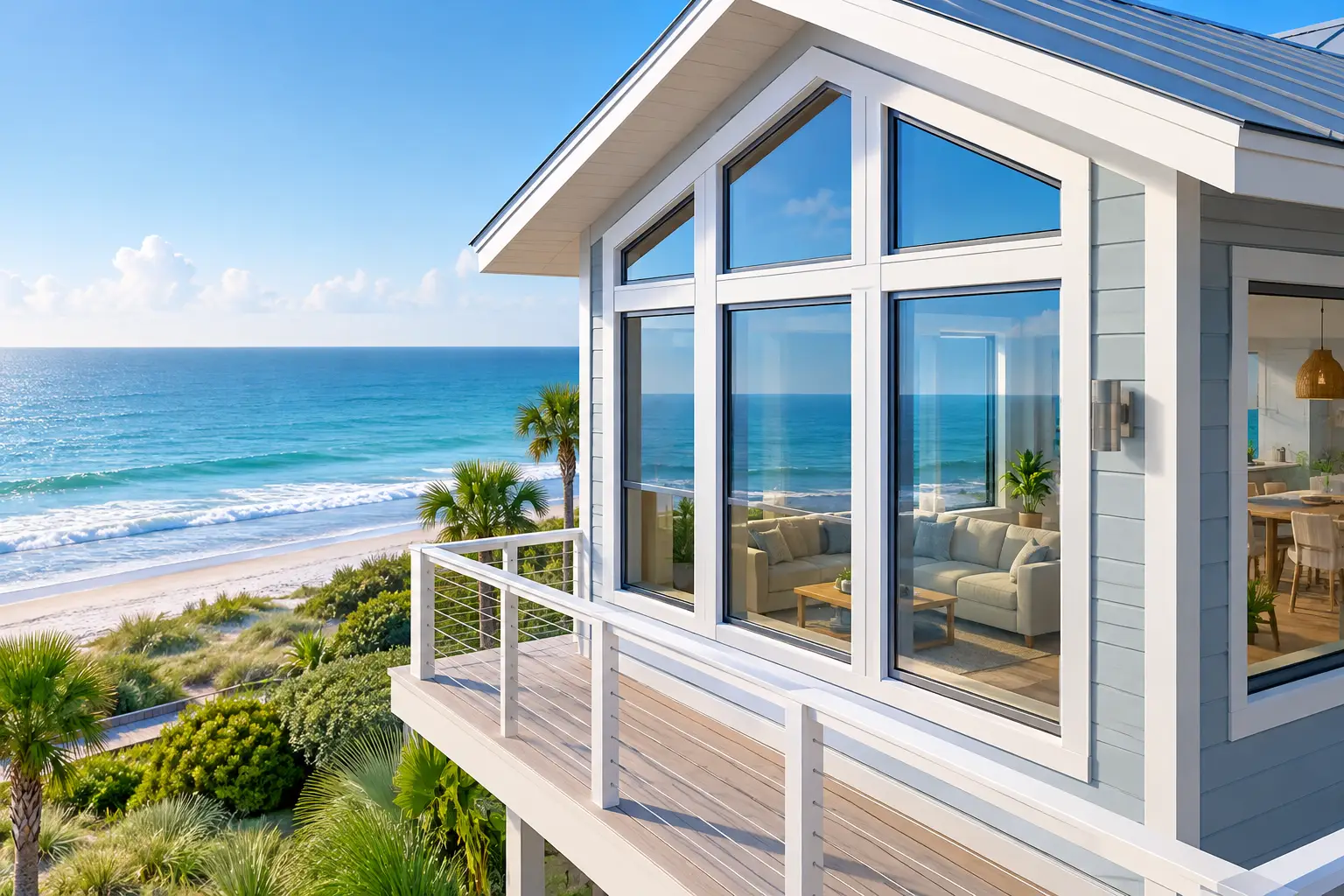
A coastal view can be the defining feature of a home, but the same exposure that makes the property special can be hard on its exterior. Salt spray, humid air, wind-driven rain, intense sun, and storm pressure all place demands on window frames, glass, seals, hardware, and installation details. The best windows for coastal homes are not selected by appearance alone. They are specified as a complete system designed for the building’s exposure, local code requirements, and architectural goals.
For a beachfront residence, an elevated home near a bay, or a renovation in a salt-air environment, the right choice delivers more than a clear view. It helps keep interiors quiet, comfortable, secure, and protected from water and air infiltration over the long term.
What Coastal Exposure Does to Windows
Coastal conditions accelerate the problems that ordinary windows may hide for years in a more protected location. Salt can settle on frames and hardware, drawing moisture to the surface and increasing the risk of corrosion. Wind can force rain against seals and drainage paths. Repeated heat and UV exposure can affect finishes, gaskets, and the movement of materials over time.
The window must also manage structural loads. A large picture window facing open water may experience very different wind pressures than a sheltered window on the inland side of the same house. Local building codes, elevation, distance from the shoreline, exposure category, and opening size all affect the required performance level.
That is why a coastal window package should be reviewed opening by opening. A single specification across the entire home may be appropriate, but it should be the result of an engineering and design review, not an assumption.
The Best Windows for Coastal Homes Start With the Frame
Frame material has a direct effect on maintenance, thermal performance, sightlines, and long-term resilience. For many coastal projects, high-performance uPVC and thermally broken aluminum offer the most practical balance of durability and design freedom.
uPVC for insulation and low-maintenance performance
European-style uPVC windows are well suited to homes where energy efficiency, quiet interiors, and low maintenance are priorities. Quality uPVC does not rot, does not require repainting like wood, and is not subject to the same corrosion concerns as unprotected metal. Multi-chamber profiles help reduce heat transfer, which supports more stable indoor temperatures in both cooling- and heating-dominated climates.
A precision-built uPVC system with triple glazing and triple gasket sealing can provide excellent protection against air and water infiltration. The multiple seals create controlled compression around the sash, helping the window perform during rain and high winds when installation and drainage are properly handled.
uPVC is especially compelling for bedroom wings, whole-home replacement projects, and homes near busy waterfront roads where acoustic comfort matters. The trade-off is profile size. While modern European systems can look clean and refined, aluminum generally allows narrower frames for exceptionally large glass areas.
Thermally broken aluminum for large openings and slim profiles
Aluminum is a strong choice for contemporary coastal architecture, expansive glass walls, large fixed windows, and oversized sliding or lift-and-slide door systems. Its structural strength supports broad spans and slim modern profiles, allowing the glass and view to take center stage.
For coastal use, the details matter. Specify aluminum systems with appropriate corrosion-resistant finishes, carefully selected hardware, and thermal breaks that separate the interior and exterior portions of the frame. A thermal break reduces heat transfer through the metal, helping control condensation risk and improving interior comfort.
Aluminum can be the right answer for a dramatic ocean-facing elevation, but it should not be treated as a generic commodity frame. Finish quality, glazing capacity, drainage design, hardware specification, and professionally installed perimeter seals determine how it performs in real coastal conditions.
Specify Glass for Wind, Sun, and Comfort
Glass selection is often where performance requirements and everyday comfort come together. Coastal homes frequently have broad exposures that capture strong sun as well as views, so the glazing package must be tailored to orientation and climate.
Insulated glass units with Low-E coatings can reduce unwanted solar heat gain while retaining useful natural light. In warmer coastal regions, solar-control glazing may reduce the burden on air conditioning, especially on west- and south-facing elevations. In cooler climates, the balance may shift toward retaining interior heat while still managing glare.
Laminated glass deserves close consideration where impact resistance, safety, and sound reduction are important. It uses an interlayer that helps hold the glass together if broken. Depending on the project location and code, impact-rated glazing may be required for designated windborne debris regions. Even where it is not mandatory, it can be a sensible investment for exposed areas.
Triple glazing is not automatically necessary for every coastal project. It provides meaningful insulation and sound-control benefits, but it adds weight and cost. The best decision depends on climate zone, frame system, desired acoustic performance, local wind requirements, and the size of each opening. A well-specified double-pane insulated unit may be suitable in some applications, while triple glazing can be the stronger choice for a quiet, energy-efficient bedroom or a home with year-round heating and cooling demands.
Do Not Overlook Hardware, Seals, and Drainage
Windows are only as dependable as their smallest working components. Coastal air can be particularly hard on hinges, handles, fasteners, rollers, and locking points. Corrosion-resistant hardware should be specified for exposed locations, and it should be compatible with the window system rather than added as an afterthought.
European tilt-and-turn windows are particularly useful in coastal homes because they pair multi-point security with flexible operation. Turn the handle one way for a wide opening and another for controlled top ventilation. When closed, the sash compresses against multiple gasket lines, supporting strong air and water performance. This makes tilt-and-turn windows a practical option for bedrooms, living areas, and replacement projects that need ventilation without giving up a refined appearance.
Drainage is equally critical. A window system needs a clear path to direct incidental water away from the frame. Sill design, weep paths, flashing, integration with the weather-resistive barrier, and exterior sealant joints must work together. A premium window cannot compensate for incorrect flashing or an installation that ignores the wall assembly.
Match Performance Ratings to the Actual Site
A coastal home should not be specified from a showroom sample alone. Ask for documentation that addresses the applicable air, water, structural, and, where required, impact performance criteria. The project team should verify that the selected size, glazing thickness, configuration, and installation method are suitable for the design pressure at each location.
This matters most with large fixed glass, corner windows, patio doors, and upper-story openings. Bigger openings create bigger opportunities for views, but they may require heavier glass, reinforced profiles, different mullion layouts, or a revised configuration to meet performance needs.
There is no single “coastal-rated” window that fits every shoreline property. A protected condo balcony in a moderate climate has different demands than a custom home facing open water in a hurricane-prone region. Exact measurements, site exposure, local requirements, and the home’s architectural design should guide the final system selection.
Installation Is Part of the Window System
Precision-engineered windows need precision installation. The installer must establish the opening correctly, set the frame level and plumb, provide proper shimming and fastening, preserve drainage paths, and integrate flashing with the wall’s weather barrier. The interior and exterior perimeter joints must be sealed with materials appropriate to their role, not simply filled with foam or caulk.
For replacement work, the condition of the existing opening deserves careful attention. Hidden water damage, uneven framing, or poorly detailed exterior cladding can affect the scope. Addressing those issues before the new windows are set protects the investment and helps prevent recurring leaks.
Gold Crown Europe Windows approaches this process as a coordinated project, from reviewing plans and exact measurements through custom manufacturing, logistics, delivery, and professional installation. That coordination is particularly valuable when a home includes a mix of fixed windows, tilt-and-turn units, large aluminum doors, and custom-shaped openings.
Choose for the View You Want to Keep
The right coastal window does not ask homeowners to choose between design and protection. It brings the two together through a frame material suited to the opening, glazing selected for the climate and exposure, corrosion-conscious hardware, engineered drainage, and installation that respects the entire wall assembly.
Before finalizing a window schedule, review each elevation with the project team. The best choice may be insulated uPVC for quiet private rooms, thermally broken aluminum for panoramic living spaces, and reinforced, code-appropriate glazing where wind exposure is highest. That thoughtful approach keeps the focus where it belongs: on enjoying the water, not worrying about what the next storm will reveal.