
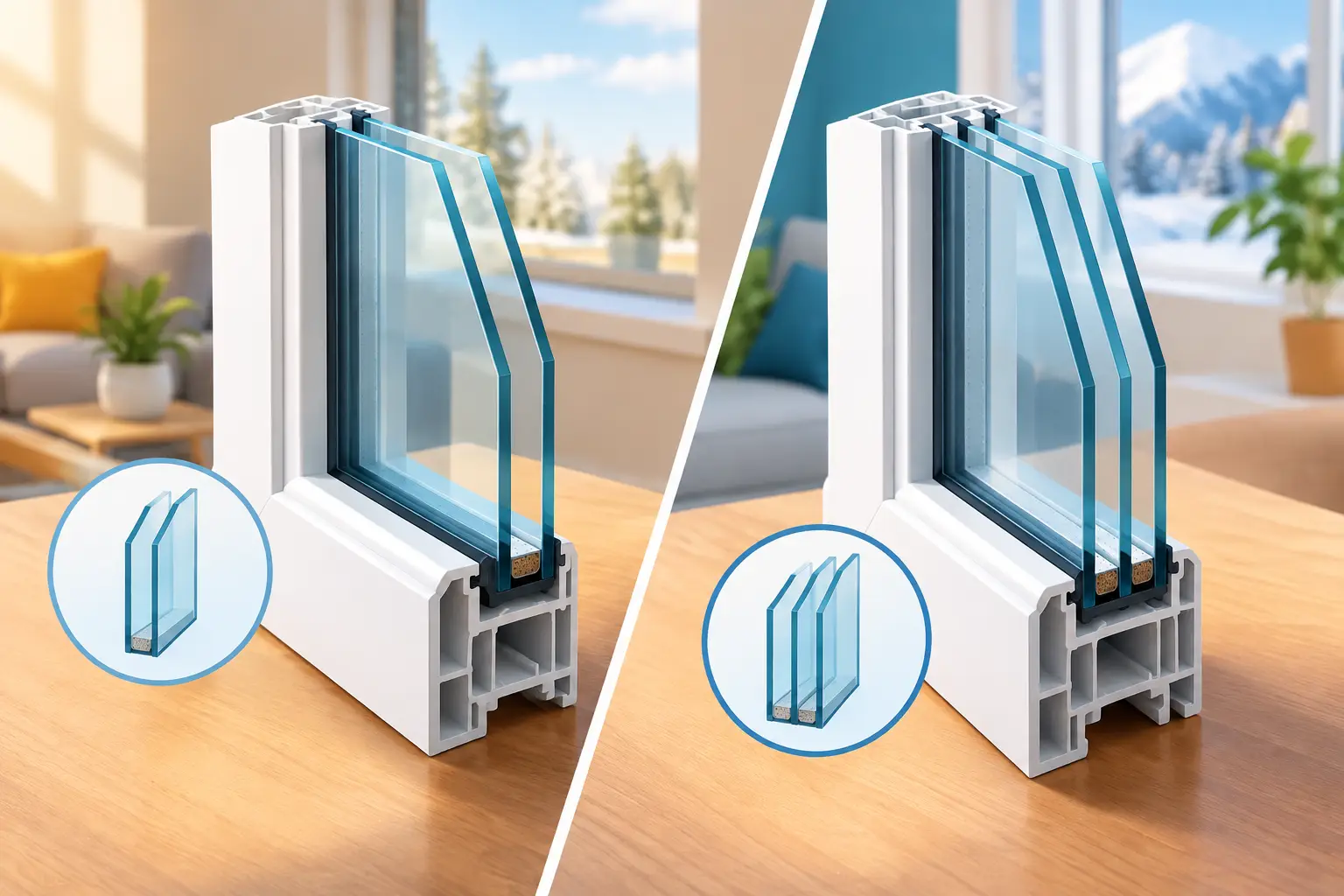
A window choice can shape how a home feels every day. In the double vs triple pane windows decision, the right answer is not simply the unit with more glass. It is the system that matches the climate, wall design, architecture, budget, and performance expectations of the project. For a custom home, a major renovation, or a high-value replacement, that distinction matters.
A well-engineered window is not just glazing in a frame. Its glass package, spacer, seals, frame profile, installation details, and opening style work together to control heat, air, sound, and moisture. European-style uPVC and aluminum systems are designed around that complete performance picture.
Double vs Triple Pane Windows: The Core Difference
Double-pane windows use two sheets of glass separated by an insulating space. Triple-pane windows use three sheets of glass and two insulating spaces. Those spaces are typically filled with an inert gas, such as argon, to slow heat transfer. Low-emissivity, or Low-E, coatings can further manage solar heat and reduce the movement of indoor heat through the glass.
The added pane in a triple-glazed unit creates another thermal barrier. This generally improves the window’s U-factor, which measures how readily heat moves through the product. Lower U-factor values indicate better insulation. Triple glazing can also improve interior glass temperatures during cold weather, making rooms near the windows more comfortable.
That advantage is real, but the glazing count alone does not tell the whole story. A poorly sealed triple-pane window or an ordinary frame can underperform a precision-engineered double-pane unit with quality Low-E glass, insulated spacers, and professional installation. The strongest specification considers the complete window system.
When Double-Pane Windows Make Sense
High-performance double-pane windows remain an excellent choice for many US projects. In moderate climates, they can deliver substantial energy savings and comfort improvements compared with older single-pane units or basic builder-grade windows. They are also often the sensible choice when a project needs to balance performance across many openings.
A quality double-glazed package may be especially appropriate for a home with good wall and roof insulation, shaded exposures, and a climate without prolonged severe cold. It can also be a practical option where design priorities call for large expanses of glass but the project budget is better allocated to upgraded frame systems, exterior shading, or higher-performance doors.
Glass selection remains critical. A southern or western elevation may need a different solar heat gain coefficient than a shaded north-facing wall. In warm, sunny regions, managing unwanted solar gain can be as valuable as adding another pane of glass. The correct Low-E coating can help reduce cooling loads while preserving useful daylight.
For many remodels, double-pane units in a multi-chamber uPVC profile provide a major step forward in quiet, comfort, and lower heating and cooling demand. The key is to avoid treating all double-pane products as equal. Frame depth, glass thickness, seal quality, hardware, and exact sizing affect real-world results.
Where Triple-Pane Windows Earn Their Value
Triple-pane windows are often the stronger long-term choice in cold climates, high-altitude regions, and locations with large seasonal temperature swings. They help reduce heat loss, limit cold drafts near glazing, and improve the comfort of rooms with broad window walls or tall openings.
They can be particularly valuable in custom homes designed with expansive glass, open living areas, and closely placed seating near windows. Better interior glass temperatures mean fewer cold zones along the perimeter of the room. That can allow architects and homeowners more freedom to use glass as a defining design element without sacrificing everyday comfort.
Triple glazing is also worth considering when the home is designed for elevated energy performance. If the building envelope includes advanced insulation, air sealing, and efficient mechanical systems, lower-performing windows can become the weak point. Upgrading the glazing helps create a more consistent thermal envelope.
Sound control is another reason to consider triple-pane construction, although it requires a careful specification. An extra pane can help, but the best acoustic glass package is not always three identical pieces of glass. Using different glass thicknesses, laminated glass, and carefully engineered air spaces can disrupt sound frequencies more effectively. For a residence near traffic, airports, rail lines, or active commercial areas, acoustic performance should be reviewed as its own requirement.
The Trade-Offs to Consider
Triple-pane units typically cost more than comparable double-pane units. They are also heavier, which can affect handling, hardware selection, and the engineering of very large operable panels. In premium systems, these requirements are addressed through proper profile design, reinforced components where needed, and hardware rated for the sash weight.
The return on that additional investment depends on the project. A triple-pane package may produce meaningful comfort and energy benefits in Minneapolis, Denver, Boston, or mountain regions. In a mild coastal climate, the financial payback may be slower, though homeowners may still value the quieter interior and refined feel.
Solar exposure changes the calculation as well. More insulating glass is helpful in winter, but a window must still be specified to manage summer sun. The goal is not to choose the highest number of panes by default. It is to select the glass coatings, gas fills, frame system, and shading strategy that suit each elevation.
Sightlines are another design consideration. Triple glazing can require a deeper sash and profile to support the added glass weight. Modern European systems are engineered to maintain clean, contemporary proportions, but architects should review frame sections early when slim profiles or large glazed areas are central to the design.
Frame and Seal Performance Matter as Much as Glass
The glass unit is only one part of the opening. A high-performance uPVC frame with multiple insulated chambers can reduce thermal bridging and support excellent air and water performance. Thermally broken aluminum systems bring a durable, slim-profile solution to contemporary architecture, large openings, and commercial applications. The right material depends on size, structural needs, appearance, exposure, and performance targets.
Seals deserve equal attention. A triple gasket seal creates multiple lines of defense against air and water infiltration while helping maintain consistent compression around the sash. Combined with precision-built frames and multi-point locking hardware, this design supports a tighter, quieter window that performs reliably through changing weather.
Operable windows should not be overlooked. Tilt-and-turn windows, for example, offer secure ventilation through the tilt position and full inward opening for cleaning and egress where appropriate. Their perimeter locking and compression seals can deliver a level of closure quality that is difficult to achieve with basic sliding window designs.
Installation Protects the Investment
Even a premium triple-pane window can lose much of its value if it is installed incorrectly. The rough opening must be prepared for the actual unit dimensions, flashed appropriately, insulated without distorting the frame, and sealed in a way that manages air and water while allowing for material movement.
Custom manufacturing provides an advantage here. Rather than forcing standard stock sizes into uneven or architecturally specific openings, made-to-measure windows can be engineered for exact conditions. This is especially valuable in renovation work, where existing openings may vary, and in new construction, where large or unconventional configurations require careful coordination.
At Gold Crown Europe Windows, the process begins with reviewing plans and measurements so the selected system, glazing package, and configuration align with the project before manufacturing begins. Professional coordination through delivery and installation helps protect the performance designed into the product.
How to Choose the Right Glass Package
Start with the climate and the building’s goals. A cold-climate home with extensive glazing may benefit from triple-pane windows throughout. A mixed-climate home may use triple glazing in bedrooms, primary living spaces, and north-facing elevations while using a carefully selected double-pane package elsewhere. For a commercial facade, structural requirements, solar exposure, occupant comfort, and code compliance may guide the decision more than a single residential rule of thumb.
Ask for performance values for the complete window, not glass-only claims. Review U-factor, solar heat gain coefficient, air infiltration ratings, visible transmittance, and sound-control options when relevant. Then consider the frame material, opening type, glass dimensions, and installation method as one coordinated system.
The best choice is the one that lets the building perform as beautifully as it looks. Whether that means a refined double-pane configuration or a precision-engineered triple-pane system, a tailored specification gives you comfort, quiet, security, and lasting architectural value long after the project is complete.