
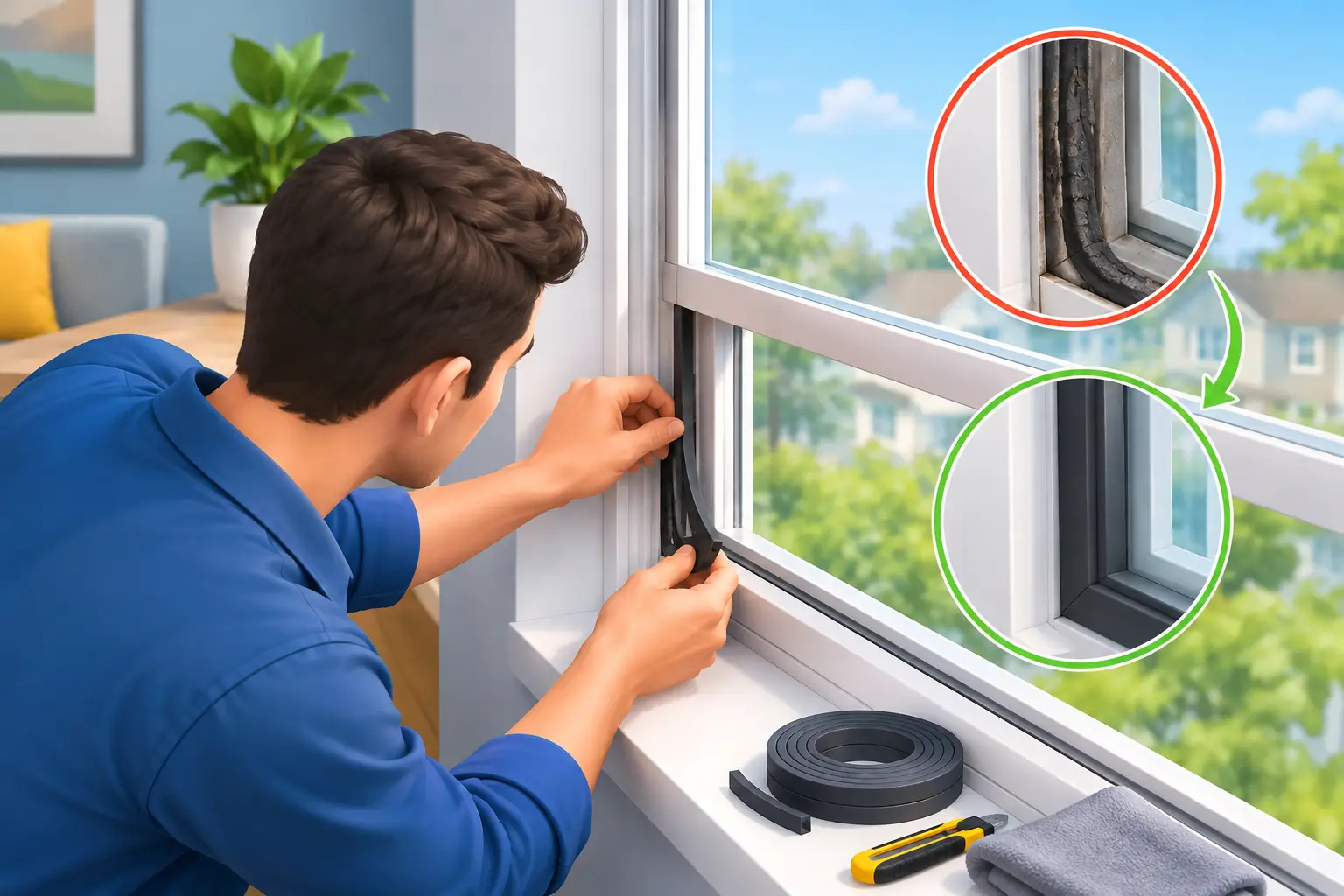
A window can look perfectly intact from across the room and still be losing performance at its edges. Drafts, fogged glass, water stains, and rising HVAC use often lead homeowners to ask when to replace window seals. The answer depends on which seal has failed – and whether the window’s glass, frame, drainage path, or installation is actually the source of the problem.
For a quality home, window seals are not a minor detail. They control air, water, sound, and thermal performance at the points where these forces most often enter. A precise diagnosis protects the value of the existing window when repair is appropriate and prevents a short-term fix from becoming an ongoing comfort issue.
What “window seals” can mean
The term window seal is commonly used for several different components. Each one fails differently and requires a different solution.
An insulated glass unit, often called an IGU, has a perimeter seal around the space between its panes. This sealed space may contain dry air or insulating gas. When that seal fails, moisture can enter between the panes, causing haze, fog, or mineral deposits that cannot be cleaned from either side of the glass.
Operable windows also use compression gaskets or weatherstripping around the sash. These seals create a tight contact when the window closes. European tilt-and-turn systems commonly use multiple continuous gaskets that provide strong protection against air, water, and sound infiltration.
Finally, exterior sealant may be installed where the window frame meets cladding, trim, masonry, or another building material. That sealant is part of the wall’s weather-resistance system, not the insulated glass unit itself. Cracked caulk at the exterior does not automatically mean the window has failed, but it should be evaluated before water reaches the wall assembly.
When to replace window seals: the signs that matter
The clearest warning sign of a failed insulated glass seal is condensation or cloudiness between glass panes. Surface condensation on the room side can result from indoor humidity, while exterior condensation can occur on highly efficient glass during certain weather conditions. Moisture trapped between panes is different: it points to a compromised IGU.
Other signs deserve a closer inspection before deciding on replacement:
- A persistent draft around a closed sash may indicate worn gaskets, poor sash adjustment, frame distortion, or an installation gap.
- Whistling during wind, street noise that seems unusually sharp, or visible daylight at the sash edge can signal inadequate compression.
- Water staining on interior trim or drywall may come from failed exterior sealant, flashing, drainage blockage, or a window that was installed without the correct weather-management details.
- Brittle, flattened, torn, or shrunken rubber gaskets can no longer maintain even contact around the opening.
- A window that requires force to latch may have misaligned hardware or a sagging sash. Forcing it closed can further damage gaskets and locking points.
These symptoms can overlap. For example, a cold area near a window may be caused by a broken glass seal, but it may also result from lower-performing glass, an uninsulated rough opening, or air leakage around the frame. A professional inspection should distinguish between them instead of treating every comfort complaint with new caulk.
Failed glass seals usually require glass replacement
When the seal around an insulated glass unit fails, applying sealant around the outside of the pane will not restore the insulated space inside it. The moisture is already between the panes, and the unit has lost part of its thermal performance. Temporary defogging services may improve appearance, but they do not recreate a factory-controlled, long-term insulated glass seal.
If the frame, sash, hardware, and surrounding installation remain in good condition, replacing the glass unit or complete sash can be a sensible repair. This is especially true when the window is a newer system with available matching components. The replacement glass should be made to the exact sightline, thickness, spacer, coating, and safety-glass requirements of the existing opening.
The trade-off is availability. Older windows, discontinued product lines, custom shapes, and unusual glass configurations may make a precise replacement difficult or disproportionately expensive. At that point, a complete window replacement may offer better long-term value, particularly if multiple units show the same age-related failures.
Worn gaskets can often be repaired without replacing the window
Compression gaskets and weatherstripping are serviceable components in many quality window systems. If the glass is clear and the frame is sound, replacing worn gaskets can restore a tighter close, reduce drafts, and improve sound control.
The correct gasket profile matters. A generic adhesive weatherstrip may fill a visible gap, but it can interfere with sash operation, prevent proper drainage, or create uneven pressure against the frame. Precision-engineered uPVC and aluminum windows are designed around specific gasket channels and closing tolerances. The replacement seal must match the system, not simply look similar.
Before changing gaskets, check adjustment. Tilt-and-turn and multi-point locking hardware can often be adjusted to restore even compression around the sash. This should be done carefully. Excessive pressure may make the handle difficult to operate and shorten the life of hardware, while insufficient pressure allows air and water to pass through.
Do not overlook drainage and exterior detailing
Windows are designed to manage a limited amount of water. Exterior glazing beads, frame chambers, sill slopes, weep holes, flashing, and perimeter sealant all work together to move water outward. Blocking a weep path with caulk or paint can turn a manageable exterior exposure into an interior leak.
Exterior sealant should be replaced when it has separated from the frame or wall, cracked deeply, lost flexibility, or shows gaps that expose the joint behind it. The joint must first be cleaned and prepared correctly. New sealant applied over failing material often separates quickly because the bond is only as reliable as the surface beneath it.
Water intrusion requires more urgency than a minor draft. If trim feels soft, paint is bubbling, or staining returns after rain, have the window perimeter and wall opening inspected promptly. The visible seal may be only one part of the issue. Proper flashing and integration with the surrounding weather-resistive barrier are essential, particularly in remodeling projects where existing conditions can be hidden behind finishes.
Repair or replace: how to make the right call
A single failed insulated glass unit in an otherwise excellent window generally supports targeted repair. The same is true for isolated gasket wear or exterior sealant deterioration when the frame and installation are performing properly.
Whole-window replacement becomes more practical when failures are widespread, frames are warped or deteriorated, operating hardware is no longer reliable, or the existing units cannot meet the project’s energy, acoustic, security, or design goals. It can also be the better decision during a whole-home renovation, when opening sizes, exterior details, and interior finishes are already being updated.
For homeowners replacing older units, the gain is not limited to new seals. A modern European-style window system can combine insulated glazing, thermally efficient profiles, continuous multi-gasket sealing, multi-point security, and exact custom sizing. Triple-glazed configurations and triple gasket seals can provide meaningful improvements in comfort, sound reduction, and resistance to air and water infiltration when selected for the climate and installed correctly.
Aluminum and uPVC systems each have their place. Thermally broken aluminum supports slim profiles and large architectural openings, while high-performance uPVC offers strong insulation and low-maintenance durability. The right choice depends on the opening size, glass weight, architectural style, climate exposure, and desired sightlines.
What to do before scheduling a repair
Start by documenting when the issue appears. Is the draft noticeable only during wind? Does fogging remain between the panes in all weather? Does water appear after heavy rain or after washing the window? Photos of the glass, interior trim, exterior joints, and any standing water help establish a useful record.
Then identify the window system if possible. Look for a label between the panes, on the sash edge, or near the hardware. Knowing the manufacturer and approximate installation date makes it easier to determine whether factory-matched glass, gaskets, or hardware are available.
Avoid aggressively scraping gaskets, drilling glass, sealing over weep holes, or injecting foam around a frame without understanding the assembly. These actions can conceal the symptom while creating drainage, operability, or moisture problems behind the wall.
A window should close quietly, lock with reasonable effort, remain clear between the panes, and keep the indoor environment comfortable through changing weather. When it does not, the best next step is a precise evaluation of the full window system – glass, gaskets, frame, drainage, and installation – so the repair supports performance for years rather than only the next season.